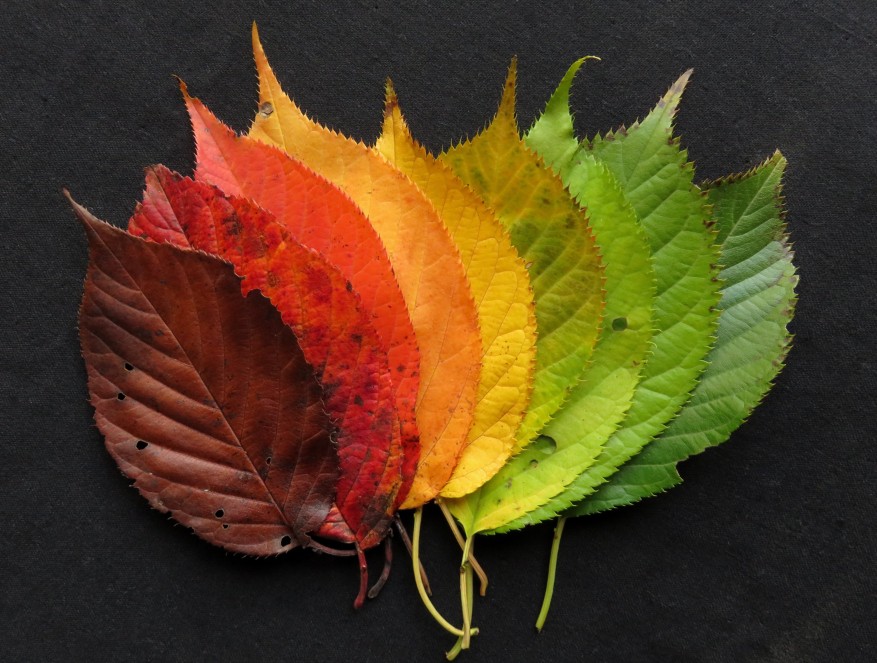
The Upper Midwest’s autumn foliage is a disappointment. Except for occasional red-and-orange maples, fallen leaves are russet. Everything appears brown.
While coloration occurs wherever deciduous trees are found, the most brightly colored foliage is in the northern hemisphere, including here.
Changes in leaf color come from the loss of chlorophyll green and the gain of red anthocyanin. Yellow is due to yellow and orange carotenoids already present but masked by chlorophyll’s intense summer green. Leaves appear brown due to chlorophyll green and anthocyanin red combining.
The latter is all we see here in Nebraska and nearby states.
Trees are thought to shed leaves because high maintenance costs outweigh the benefits of wintertime photosynthesis. But other factors include insect predation, water loss and wind damage when trees “sway, deeply and loudly,” as poet Wallace Stevens writes.
In the future, global warming and increased carbon dioxide may stop or delay autumn’s spectacle. Studies have found more than a one-month delay in fall’s onset since the 19th century.
So, instead of a colorful, festive autumn, both landscape and mood are drab and dull.
The Region November
It is hard to hear the north wind again,
And to watch the treetops, as they sway.
They sway, deeply and loudly, in an effort,
So much less than feeling, so much less than speech,
Saying and saying, the way things say
On the level of that which is not yet knowledge:
A revelation not yet intended.
It is like a critic of God, the world
And human nature, pensively seated
On the waste throne of his own wilderness.
Deeplier, deeplier, loudlier, loudlier,
The trees are swaying, swaying, swaying.
“The Region November” was written in 1955 by the American poet Wallace Stevens and was published a year later, after his death, in a collection of his poetry and prose.





Be First to Comment