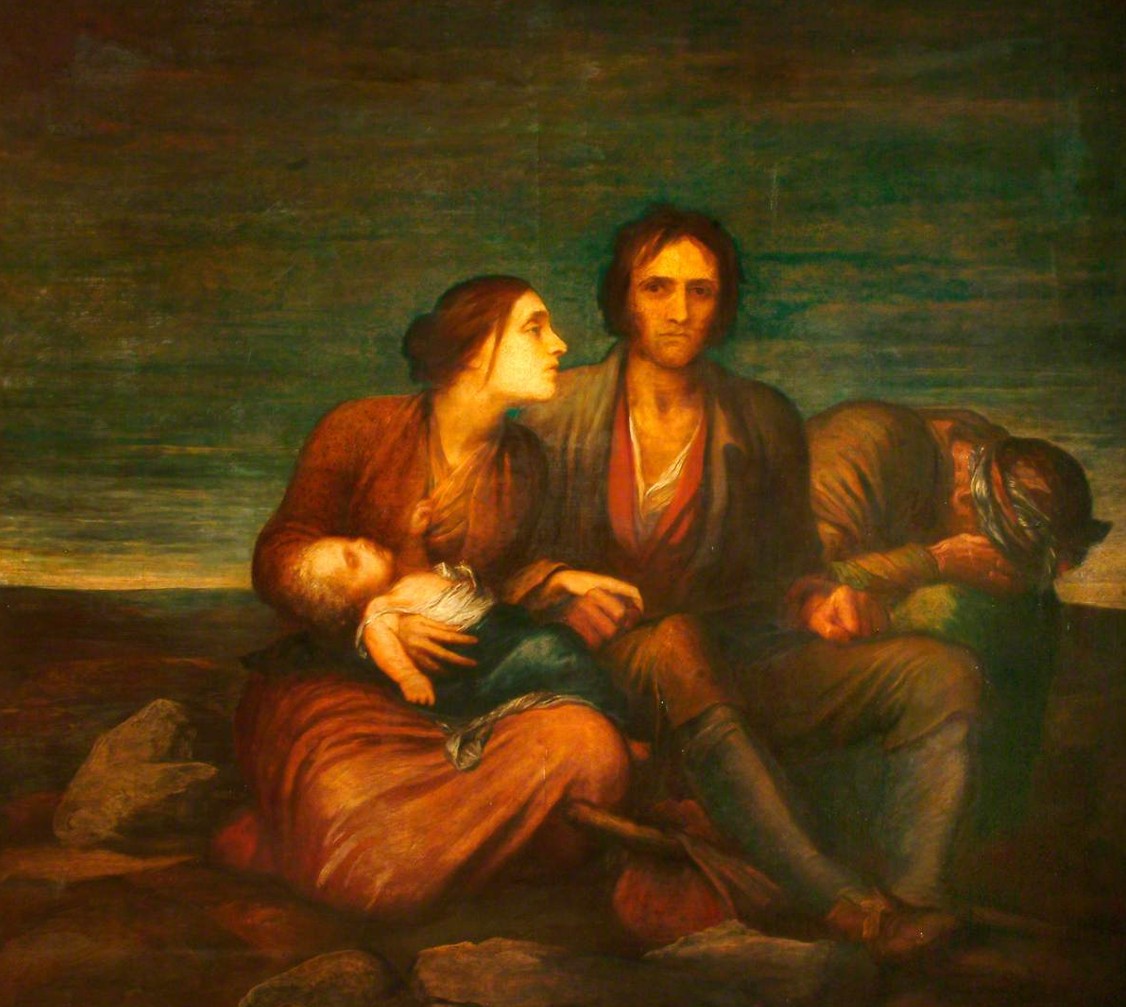
History lies by labeling it Ireland’s Great Potato Famine of the mid-1800s. It wasn’t. It was imposed starvation.
The worst year was 1847. A blight of potatoes, on which the Irish largely subsisted, was made far worse by callous evictions by English absentee owners, religious bigotry, profiteering and government inaction.
Large quantities of food were exported from Ireland despite ongoing deaths, and London’s refusal to bar such exports created immediate and continuing bitterness.
“When a country is full of food and exporting it, there can be no famine,” playwright George Bernard Shaw noted.
One million Irish died of starvation. Between 1845 and 1855, 2.1 million Irish emigrated. By 1901, Ireland’s population had fallen from 8.5 to 4.4 million.
“With starvation at our doors, grimly staring us, vessels laden with our sole hopes of existence, our provisions, are hourly wafted from our every port … thence to go to feed the foreigner, leaving starvation and death,” wrote priest Nicolas McEvoy in 1845.
“The Almighty, indeed, sent the potato blight, but the English created the Famine,” Irish nationalist John Mitchel said in 1861.